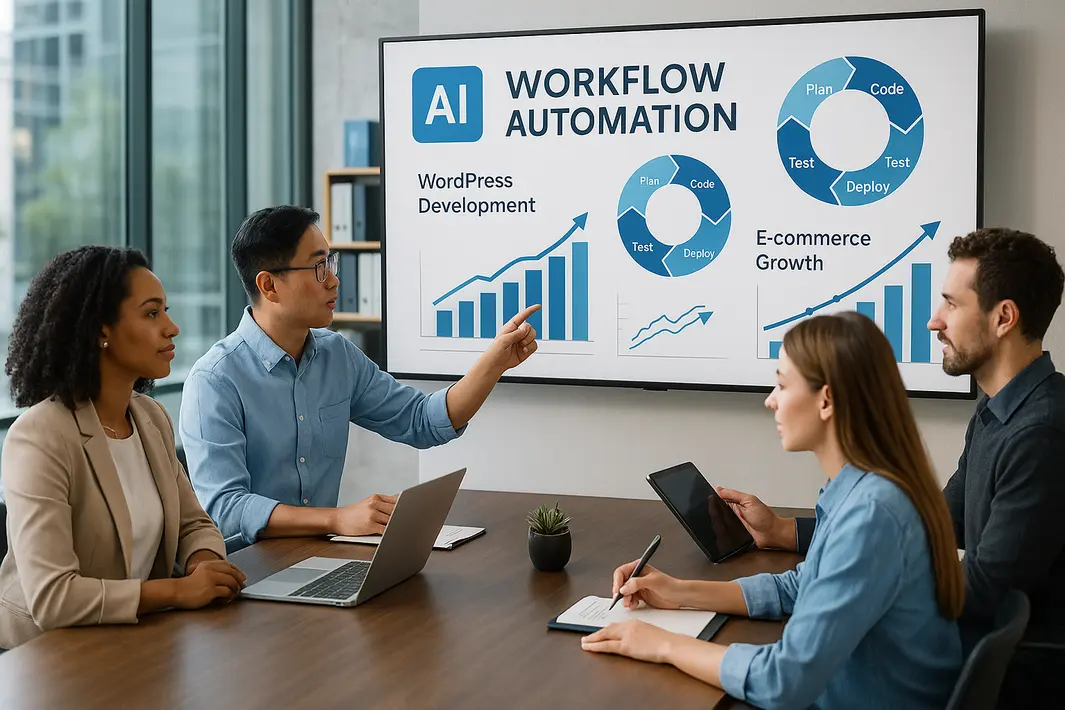
Navigating the Future: AI-Powered Workflow Automation Trends Shaping WordPress Development and E-commerce
In today’s rapidly evolving digital marketplace, business owners are under more pressure than ever to adapt and innovate. As new technologies emerge, those at the forefront of adoption often secure a critical competitive advantage. Among the most promising of these advancements is the integration of artificial intelligence into workflow automation. Notably, the fusion of AI-powered workflow automation with WordPress development and e-commerce optimization is transforming the way businesses manage processes, engage customers, and scale operations. By automating repetitive tasks and augmenting decision-making, organizations can unlock greater productivity and agility. This article delves into the latest trends in AI-driven workflow automation and discusses how innovative tools, such as AI workflow builders and specialized WordPress automation tools, are redefining business efficiency for online platforms. For entrepreneurs, developers, and digital strategists, staying informed about these trends is more crucial than ever as they navigate a future shaped by intelligent automation.
The Evolution of Workflow Automation: From Manual Tasks to Intelligent Systems
The pursuit of workplace efficiency has long motivated the development of workflow automation solutions. Traditionally, automation involved the use of rule-based systems to handle basic, repetitive tasks. However, the emergence of AI workflow builders marks a significant shift from rigid scripts to adaptive, intelligent frameworks. AI-powered automation leverages machine learning and data analytics, enabling workflows to evolve alongside business requirements and external trends.
How AI Workflow Builders Are Changing the Game
Unlike classical automation platforms, an AI workflow builder can process structured and unstructured data in real time. This allows it to suggest optimizations, detect potential process bottlenecks, and even predict outcomes based on historical patterns. For example, instead of manually setting email triggers or inventory updates, automated workflows can dynamically adjust to customer behavior, market demand, or sales trends, all without continuous human oversight. Such intelligence amplifies the value of business workflow automation in WordPress development and e-commerce by reducing manual effort while increasing adaptiveness and precision.
AI Workflow Builder Integration in WordPress Development
WordPress, as the backbone of over 40% of websites worldwide, is experiencing a transformation fueled by workflow automation. With a new generation of WordPress automation tools leveraging AI, developers can design dynamic sites where content management, security checks, and user engagement processes are automated—greatly reducing development time and recurring maintenance costs.
Transformational Benefits for Developers and Site Owners
Adopting AI workflow builders in WordPress environments streamlines a multitude of tasks. For example, automated backups, content scheduling, and performance monitoring can be set up with minimal configuration. Advanced tools use AI to analyze traffic spikes and preset custom responses, such as scaling server resources or activating temporary landing pages for high-traffic promotions. This hands-off approach empowers teams to focus on creative and strategic growth activities while maintaining confidence in reliable, intelligent infrastructure.
Driving E-commerce Growth with Business Workflow Automation
E-commerce success depends heavily on the seamless orchestration of marketing, inventory, customer service, and fulfillment. Business workflow automation supercharged by AI provides a strategic edge, enabling online retailers to not only streamline operations, but also deliver smarter personalization and faster resolution of customer inquiries.
Customer Journey Optimization and Operational Efficiency
Intelligent automation can segment customers, recommend products, and trigger retargeting campaigns without manual input. By analyzing real-time user actions, e-commerce sites powered by WordPress automation tools can dynamically adjust website banners, emails, and discounts, leading to higher conversion rates. Furthermore, AI can resolve common support requests—such as order status updates or returns—through chatbots or automated ticketing systems, simultaneously improving customer satisfaction and reducing support costs. Such adaptability is quickly becoming a non-negotiable standard in modern e-commerce management.
Emerging AI-Powered WordPress Automation Tools: Features and Use Cases
The market for WordPress automation tools continues to expand as AI capabilities improve. These tools support a range of features including automated publishing, SEO improvements, security monitoring, and multichannel content distribution. The use of AI workflow builders within these environments enables unprecedented levels of customization and personalization, driving both user engagement and operational efficiency.
Key Features and Practical Applications
- Smart Content Management: Tools that auto-curate content based on audience preferences and engagement history, ensuring timely and relevant delivery.
- Predictive Analytics: Integrated modules forecast website trends, such as peak traffic periods or declining user engagement, and proactively suggest optimization strategies.
- Security Automation: Automated vulnerability scanning and updates, enabled by AI-driven analysis of plugin integrity, minimize downtime and cybersecurity risks.
- E-commerce Automation: Dynamic pricing, personalized upselling, and automated product recommendations contribute to a more sophisticated and responsive storefront.
These examples highlight how the strategic deployment of business workflow automation in WordPress streamlines operations that would otherwise drain valuable resources.
Best Practices for Leveraging AI-Driven Workflow Automation
Transitioning to AI-powered workflow automation requires a deliberate and strategic approach. Businesses must balance the integration of new technologies with the need for oversight, data security, and continuous optimization. The following best practices can help organizations maximize returns from AI workflow builder adoption and WordPress automation tools.
Implementation Strategies for Sustainable Results
- Assess Automatable Processes: Begin by identifying tasks within website management and e-commerce that can benefit most from automation, such as repetitive updates, lead management, and customer segmentation.
- Prioritize Scalability: Choose AI workflow builder solutions that grow with you, supporting both simple integrations and more advanced customization as business needs evolve.
- Maintain Human Oversight: While automation reduces manual interventions, human review remains vital for quality assurance, compliance, and nuanced decision-making.
- Monitor and Optimize: Continuously track the performance of your automated workflows with analytics, ensuring they remain aligned with evolving business objectives and market dynamics.
These best practices help ensure that business workflow automation becomes a sustainable asset rather than a short-term fix.
Future Challenges and Opportunities in AI Workflow Automation
The growing reliance on AI workflow builders and WordPress automation tools introduces both exciting opportunities and fresh challenges. Issues such as data privacy, integration complexity, and the need for upskilling must be thoughtfully managed to capture the full potential of AI-driven business workflow automation.
Adapting to the Digital-First Future
One of the most significant opportunities lies in the continuous improvement of AI itself. As algorithms become more sophisticated, automation will achieve higher degrees of personalization, context-awareness, and predictive intelligence. However, organizations must be prepared to invest in cybersecurity, address data governance issues, and foster a culture of adaptability to fully harness these advancements without exposing themselves to compliance or reputational risks. Staying proactive about these trends will define success in the next era of digital transformation.
In summary, the intersection of AI-powered workflow automation and advanced digital platforms like WordPress is poised to reshape the business landscape. As AI workflow builders and WordPress automation tools become ever more critical to website and e-commerce success, early adopters can achieve unprecedented improvements in efficiency, scalability, and customer experience. By embracing strategic business workflow automation, organizations not only address current operational challenges but also lay a strong foundation for growth in an increasingly competitive digital economy. Navigating this future demands a thoughtful blend of innovation, procedural rigor, and a willingness to adapt—qualities that will define the market leaders of tomorrow.