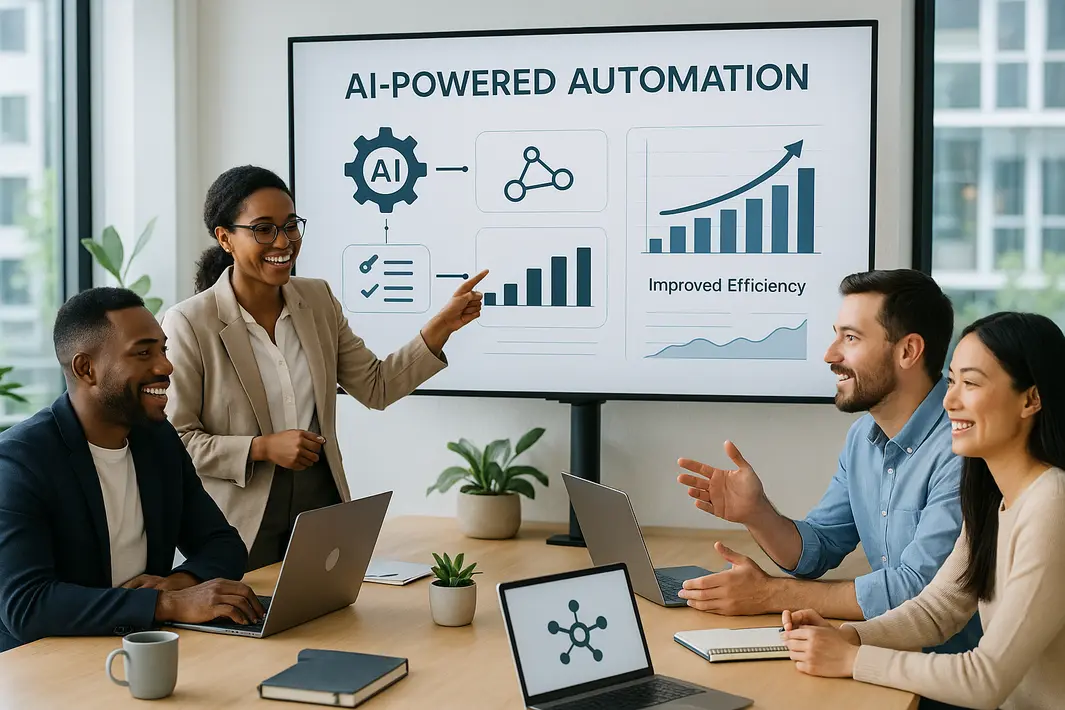
Maximizing Efficiency: How AI-Powered Automation Transforms Small Business Operations
In today’s fast-evolving digital landscape, small businesses are increasingly finding themselves in a competitive environment where efficiency, adaptability, and innovation are essential for survival and growth. Amid rising operational challenges, integrating AI automation for business has emerged as a game changer, especially for small enterprises looking to streamline their processes and gain a competitive edge. By embracing business workflow automation, small business owners can reduce errors, save time, enhance productivity, and ultimately bolster profitability. This article delves into how AI automation for business is revolutionizing operations for small businesses, examining key benefits, practical implementation strategies, potential challenges, and the most effective small business automation tools available today. With real-world insights and actionable advice, discover why AI-powered business workflow automation is no longer just an option but a necessity for ambitious small businesses seeking sustainable growth.
The Rise of AI Automation in Small Business Operations
Historically, small businesses have relied on manual processes and paper-based systems, often resulting in bottlenecks, inefficiencies, and limited scalability. Today, the business landscape is being reshaped by the accessibility of advanced technologies, with AI automation for business at the forefront. Artificial intelligence-driven automation enables small business owners to overcome traditional limitations and achieve operational excellence with fewer resources.
Understanding AI Automation for Small Businesses
AI automation for business refers to the deployment of artificial intelligence applications and systems designed to execute routine, repetitive, and data-driven tasks without human intervention. This kind of automation extends from handling basic data entry to managing complex decision-making processes across departments such as accounting, marketing, sales, and customer service. By embedding intelligence into workflows, AI allows businesses to optimize resource allocation and focus valuable human capital on higher-order tasks.
Streamlining Processes with Business Workflow Automation
The core of business success lies in efficient, repeatable processes. Business workflow automation provides the architecture for automating these processes end to end, minimizing manual intervention and maximizing consistency. For small businesses, adopting workflow automation means faster turnaround times, reduced error rates, and more scalable operations.
Key Benefits of Business Workflow Automation
- Time Savings: Automated workflows eliminate repetitive manual tasks, such as invoice processing or lead tracking, allowing employees to devote more time to critical business activities.
- Error Reduction: Automation ensures that tasks are carried out accurately, reducing the risk of costly mistakes and compliance issues.
- Improved Transparency: Automated systems provide audit trails and reporting tools that enhance visibility into operations, aiding decision-making and accountability.
With the implementation of AI, business workflow automation becomes even more powerful, as AI-driven tools can adapt to new patterns, learn from historical data, and suggest further improvements to core processes.
Choosing the Right Small Business Automation Tools
Embracing automation begins with selecting the right set of small business automation tools. While the market is teeming with solutions—from general platform-based workflows to niche, industry-specific offerings—choosing tools that align with business size, industry, and automation goals is crucial.
Categories of Automation Tools for Small Businesses
- Customer Relationship Management (CRM): AI-powered CRMs can automate customer segmentations, send personalized follow-ups, and manage pipelines more efficiently.
- Accounting & Finance: Automation tools in finance can handle invoicing, expenses tracking, and forecasting—minimizing manual effort and error.
- Marketing Automation: These platforms use AI for personalized email campaigns, social media scheduling, and lead nurturing, all tailored to user behaviors and preferences.
- Operations and HR: Automating scheduling, onboarding, and document management saves time on administrative processes, letting small teams scale their efforts.
Leading examples like Zapier, HubSpot, QuickBooks, and Mailchimp illustrate how small business automation tools can drastically reduce complexity, even for non-technical users.
Overcoming Implementation Challenges
Integrating AI automation for business into existing workflows is not without its hurdles. Common challenges include resistance to change, concerns about upfront investment, data migration issues, and worries about job displacement. However, these obstacles can be effectively managed with the right strategy and leadership buy-in.
Strategies for Successful Automation Adoption
- Engage Stakeholders Early: Involving employees in the planning and pilot phases ensures better buy-in and helps identify key pain points that automation should address.
- Start Small and Scale: Piloting automation on select processes allows for easy troubleshooting and helps demonstrate early success before expanding deployment.
- Training and Upskilling: Ongoing training programs ensure staff become comfortable using new tools, minimizing productivity dips during the transition.
- Choose Scalable Solutions: Select tools that can grow with the business, supporting additional workflows and integrations as needs evolve.
By anticipating and addressing these challenges, small businesses can unlock the full potential of business workflow automation with confidence.
Enhancing Productivity and Competitiveness
One of the most profound impacts of AI automation for business is its ability to supercharge productivity. By freeing staff from mundane tasks and improving data-driven decision-making, small businesses can reallocate resources to innovation, customer experience, and strategic initiatives. Productivity gains translate directly into greater competitiveness in the marketplace, as businesses can respond faster to trends, customer needs, and emerging opportunities.
Case Studies: Real-World Automation Success Stories
- A boutique marketing agency implemented AI-powered customer segmentation, resulting in a 30% increase in lead conversion rates while reducing manual analysis by 60%.
- An independent retailer automated inventory management and reorder processes, leading to lower stockouts and a 20% improvement in cash flow management.
- A consulting firm deployed automated workflow solutions to streamline onboarding and billing, saving hundreds of hours annually and boosting client satisfaction.
These examples demonstrate how business workflow automation is not only a driver of internal efficiency but also contributes to improved customer engagement and business reputation.
The Future of AI-Powered Small Business Automation
As AI automation technologies continue to evolve, their utility for small businesses will only expand. Developments in machine learning, natural language processing, and predictive analytics are paving the way for smarter, more adaptive small business automation tools. In the future, end-to-end automated systems will handle everything from personalized marketing to autonomous financial management, turning small businesses into agile, innovation-driven organizations.
Emerging Trends in AI Automation
- Hyper-Personalization: AI systems are becoming increasingly adept at customizing interactions and recommendations in real time, enhancing customer loyalty and satisfaction.
- Intelligent Integration: Seamless integration across platforms, databases, and third-party services is reducing silos and enabling holistic, data-driven decision-making.
- Continuous Learning: Future tools will self-improve by analyzing data patterns, anticipated needs, and contextual cues, making automation even more effective over time.
By staying ahead of these trends and investing in advanced business workflow automation solutions, small businesses can future-proof operations and remain leaders in their fields.
Summary
In conclusion, the integration of AI automation for business and cutting-edge small business automation tools is fundamentally reshaping small business operations. Automation streamlines workflows, reduces manual burdens, drives innovation, and enables businesses to react swiftly to market changes. While implementation presents unique challenges, with strategic planning and the right tools, small businesses can fully harness the benefits of business workflow automation. The path forward is clear: to remain competitive and scale sustainably in the modern economy, leveraging AI-powered automation is not simply an advantage but a necessity for transformative success. By embracing these technologies, small businesses secure their roles as agile, efficient, and forward-looking players in an ever-changing marketplace.